Showing posts with label animals. Show all posts

Sunday, March 3, 2013

Front seats to the penguin parade

A section of beach on Phillip Island near the penguin parade

The penguin parade on Phillip Island is an unforgettable experience. No photography is allowed so I will have to describe it in words.

Each evening, just after dark, groups of little penguins march ashore from the sea. They return to their burrows to sleep and feed their young after spending all day hunting for food in the sea. They waddle across open areas in groups to stay safe from predators. Then they continue their arduous march uphill, stopping to rest along the way.

The young penguins in the burrows are hungry after a long day of waiting to be fed by their parents and they impatiently call out to them, urging them uphill. It's a mass of noise and stoic procession of the little penguins very much like a show or a parade as they advertise it.

Tourists are able to view the penguins emerge from the water on the beach where seating is provided just like on a stadium. The penguin procession can be followed from wooden walkways that have been built all over the area so the penguins can go their way undisturbed underneath.

Sunday, February 24, 2013

Down under

Koala

It doesn't happen often that I enter not just a new country, but a new continent. Here I am, down under in Australia. This time, I'm not just a backpacker. I'm visiting a friend and she is showing me around. For starters, she drove me on the Great Ocean Road and I can't help but to compare it to South Africa. It reminds me so much of the Cape of Good Hope with the ocean, the flora and fauna. The vegetation and the wild animals are completely different of course, it's the experience of driving by the ocean along vast stretches of land inhabited by wild animals that is similar. I was amazed by what nature has to offer.

I saw scores of koalas on branches of eucalyptus trees. I even witnessed two koalas fighting high up on a branch without falling down.

Koalas fighting on a tree branch

I never realized that cockatoo birds can fly around in the wild. Until now I have only seen them in zoos. The birds boldly approach tables where tourists are having lunch, hoping to get a snack.

Wild cockatoos

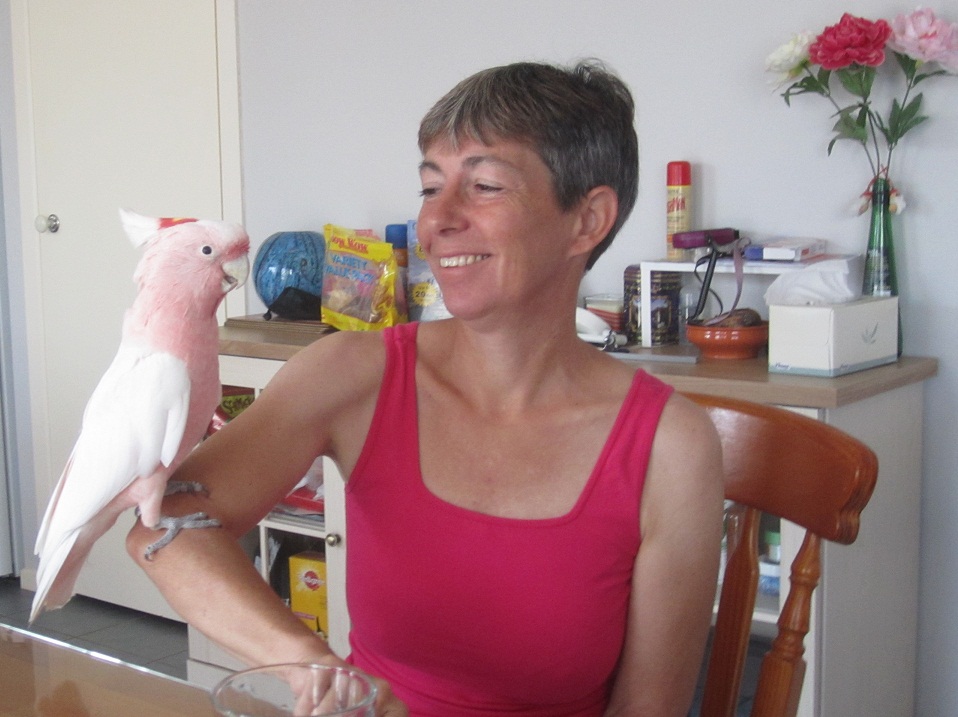
My friend owns a pet cockatoo. I think he approves of me.

Pet cockatoo

There are kangaroos, of course, but what we saw along the road was actually a wallaby. It looked like a kangaroo to me, but was too fast and I didn't catch it with my camera.

Echidna

And there was the hedgehog impersonator that ran into the bushes. There are no hedgehogs in Australia, it was an echidna.

Wednesday, January 23, 2013

Visit to a dairy farm

Desa dairy farm

There isn't much of a dairy industry in southeast Asia. Milk and dairy products are scarcely available. The few times I was served butter for breakfast it came from New Zealand. Since I'm lactose intolerant, I don't really miss dairy products but sometimes I hear from other travelers that they wish there was yogurt or sour cream.

I was quite surprised to discover that there is a dairy farm in the area around Kinabalu National Park in Borneo and that they advertise it as a tourist attraction. Or perhaps that's exactly why it's a tourist attraction: because dairy farms are so rare around here. I wasn't all that excited at the prospect of seeing cows but it made a convenient hiking destination so I decided to pay them a visit.

Platform for viewing cow milking

Whenever I visit this type of tourist attraction I marvel at how the entrepreneurial owners make extra income. For example, at the dairy farm, they charge an entrance fee, they offer bunches of grass for sale so that children can feed the calves, they charge a hefty fee for wedding photographs (maybe I lost them here, who wants to take their wedding photographs on a dairy farm?), they have guided tours through the production plant and tourists may view cow milking every afternoon (I was there in the morning so I missed it).

They also sell milk at 1,30 EUR per liter which is rather expensive, chocolate milk, and homemade ice cream. There weren’t any dairy products such as cheese but I’m guessing they sell all the milk and don't have any left over to make cheese.

Thursday, January 17, 2013

Leeches and elephant dung

Path into the jungle

I didn't really want to go into the leech infested jungle again, but my Kanabatangan river tour included a morning walk through the jungle. So I went, wearing full protective uniform: long pants, long sleeves, shirt tucked into pants, long socks pulled over pant legs, tons of bug spray all over me, borrowed rubber boots.

Ready to face the leeches, snakes and poisonous plants

Our guide didn't speak much English but the owner of our homestay filled us in: watch out for the leeches (as if I didn't know already), don't touch anything because there may be snakes behind trees or poisonous plants that would give us rashes. He also assured us that our guide is the best, he knows his way around the jungle and was sure to get us back safely. Hm, that's good to know. I'm glad he didn't send us into the jungle with a guide who didn't know his way.

There aren't any photographs from this jungle walk. I thought it best to keep my arms close to me so that I wouldn't touch any leeches or snakes or poisonous plants and I didn't want to expose my skin to the elements in order to take out my camera. Besides, there wasn't much that merited camera attention anyway. The highlights of this walk were:

  1. A giant leech climbing up a tree. I'm not kidding. It was huge. Our guide saw it and pointed it out. I'm glad he did so that I could duck out of the way, otherwise I'm sure the leech would have jumped on my face.

  2. Elephant dung. They told us that a native species of pygmy elephants live on Borneo and that there have been cases where the elephants trampled tourists. Whenever elephants are known to be in the area, the jungle walks are canceled. So what was elephant dung doing there and why were we walking in the jungle? I rather didn't think about it.

  3. Abandoned orangutan nests. We saw many of these nests up in the trees indicating that orangutans come to sleep quite close to the village. I was hoping we wouldn't really meet any orangutans face to face in the jungle.

  4. Probably a wild boar. It was far away, we heard its sound and our guide pointed it out, there was something running away.

  5. Millipedes. I've seen many of these in southeast Asia by now and I know that they aren't really dangerous.

  6. An eagle and an hammerbill. The birds were up high in the trees.

  7. Probably a macaque monkey as there was something jumping in a tree.

And that's it. I didn't catch any leeches (yay!) and came back out of the jungle alive and well.

Tuesday, January 15, 2013

River safari

Kinabatangan river

As if I didn’t have enough jungle already, I had to go even further. I thought that a boat ride on the Kinabatangan River might offer more opportunities to see wildlife. And I wasn’t disappointed. I was lucky with the weather as well because although it rains almost every day, I was able to go on all outdoor excursions that I booked without being caught in the rain.

I was excited to see many proboscis monkeys, native to Borneo. They're quite distinctive, orange in color with huge noses and what looks like beer bellies.

Proboscis monkey

We saw several species of hornbill birds.

Hornbill

The jungle was full of macaque monkeys. Here they are seen climbing cables that were actually raised for orangutans to cross the river tributaries as orangutans don't like to swim.

Macaque monkey peeing

Our boat escaped in the nick of time when a macaque monkey that was perched above us decided to pee.

And there just had to be another tourist related incident on the river cruise. We noticed a macaque monkey that was quite agitated and our guide explained that it's a dominant male protecting his family from the tourists. We moved further away so as not to agitate him further. Then a boat full of Chinese tourists navigated very close to the macaque and the tourists proceeded to taunt him. I couldn't believe that tourists would be so rude as to have fun with an animal that was already agitated. The macaque eventually backed off into the jungle. Isn't it sad that tourists who come to observe wildlife don't understand that they should behave like visitors in the jungle?

Chinese tourists taunting the macaque

Saturday, January 12, 2013

Jungles of Borneo

Tropical retreat

"It's a jungle out there!" says a tourist brochure about Borneo. Yes, it is, I can attest to that. While I'm frustrated that the internet is so slow in the jungle, I should probably take a step back and consider the fact that there is internet at all in the jungle. I'm not that much of an internet junkie that I couldn't live without it for a few days, but there are travel reservations to be made. Unfortunately, Borneo is quite touristy and the last time I showed up without a prior reservation, I had to take the crappiest accommodation that was still available.

Boardwalk through a swamp

Being in the jungle means there is the rainforest all around me with almost daily rains, lush vegetation, abundant plant and animal species, plenty of insects, humid days but surprisingly cool and pleasant nights.

Wild orchid

With the help of guides on the couple of tours I took and visits to botanical gardens I learned to recognize a few of the many species of native plants, most notably ginger and wild orchids. There is such a variety of flowering plants that I can find someting in flower anywhere I look.

Ginger bloom

I love the taste of ginger and I'm glad that due to the abundance of ginger around here they use it in generous amounts in cooking. In one of the soups there were such large chunks of ginger that a fellow traveler thought it was potatoes. I found out that they also use chopped ginger blooms to flavor and garnish food.

Canopy walk

In addition to botanical gardens there are canopy walks through the upper layers of the forest, wooden walkways across marshes and bird watching towers.

Bird watching - this is the only bird I saw, an egret

I'm staying at what is called a tropical retreat. It's in the middle of the jungle, peaceful and relaxing.

Recycled woks serve as sinks at the tropical retreat

Thursday, January 10, 2013

Orangutans learn to smoke

Orangutan

Orangutans live in the wild only in the rainforests of Borneo and Sumatra. A visit to the orangutan rehabilitation center in Sepilok is therefore a must while I'm on Borneo.

Young orangutans are brought to the rehabilitation center as orphans due to losing their mothers to deforestation or because they were confiscated as illegal pets. Very young orangutans need care just like human babies. They have to be bottle-fed every four hours, bathed and cuddled. As they grow older, the rehabilitation center provides an education process that is very similar to a human kindergarten. They play together and learn how to climb. This is a crucial skill that they must learn before they can be reintroduced into the wild.

Orangutans come for the feeding

At the age of about five years they are gradually released into the jungle. This is the age at which they would have left their mother had they grown up in the wild. They can’t survive on their own yet as they must still learn how to find food and make nests in trees where they sleep. They learn these skills by observing other orangutans. Until they are fully self-sufficient they willingly return to the rehabilitation center to sleep in their cages. The center also feeds them twice daily and tourists are allowed to observe these feedings.

Orangutans go off after feeding

Although the tourists are warned to be quiet because the orangutans are shy and may not come to feed if there is too much noise, this was not the case. Many tourists ignored the signs and yakked away incessantly. And the orangutans are oblivious to the hordes of tourists with their cameras snapping away. Because the orangutans grew up in captivity, they probably believe that groups of tourists twice daily at feeding times are a normal element of the jungle.

Eating pose

In addition to orangutans, the jungle hosts many other wild animals, including macaque monkeys. They are not only accustomed to tourists, this fellow knew I was taking his photo and he posed for me:

Macaque

The macaque monkeys also came to the feeding platform, but it was obvious who is master of the jungle. The macaques were tolerated to approach only after the orangutans ate and even then an orangutan brutally smacked a macaque who dared come too close.

Macaques approach after the orangutans are fed

As with any close encounter with monkeys/apes, tourists are warned not to touch them, not to allow them access to food or their belongings. There are free lockers at the entrance to store stuff where I gladly left my daypack, going into the jungle with only my camera, holding it tightly and closely so it wouldn’t be grabbed by a monkey or ape. And as usual in large groups of tourists, there are always those who refuse to obey instructions.

An orangutan examines a tourist's pockets

A woman allowed an orangutan to examine her pockets although she should have moved away. A guard was on hand to remind her to keep moving but she just stood there, finding it amusing. The orangutan found and took her cigarettes and lighter. Another orangutan joined him in examining the loot while the guard was upset, explaining that is why the tourists are asked to keep a distance from the animals. He went to fetch the ranger who would take care of the situation. In the meantime, the two orangutans examined the cigarettes, tried chewing them and upon discovering they were inedible, abandoned them.

Orangutans with cigarettes

Then they focused their attention on the lighter. Now it wasn’t funny anymore, what if they succeeded in lighting it? They weren’t able to light it but for lack of any better ideas, one of them bit it. Finally the ranger arrived and the orangutans immediately recognized him, handed him the two pieces of the broken lighter and went back over the fence into the jungle. It ended well although the ranger was concerned whether they had swallowed any of the lighter fluid but apparently they didn’t.

Orangutans playing with fire

All’s well that ends well. But tourists will always be tourists and there are always those who ignore instructions and thus put themselves and others in danger.

Wednesday, May 2, 2007

Velikih pet / The big five


Pravijo, da je cilj vsakega pravega lovca na divje živali, da ulovi velikih pet: lev, leopard, slon, nosorog in bivol. To so živali, za katere velja, da so najnevarnejše in torej najtežje za ulovit. V sodobnem času je lov na divje živali strogo omejen oziroma večinoma kar prepovedan, kar velja vsaj v Južnoafriški republiki. Na lov na divje živali pa se menda lahko še vedno hodi v Zimbabve, kjer je zaradi politične krize in korupcije mogoče tudi to, kar je sicer prepovedano. Če že lov na divje živali v sodobnem času ni več tako popularen, kakor je bil včasih, pa je postal cilj vsakega pravega turista, da hodi toliko časa v safarije in naravne rezervate, dokler v živo ne vidi vseh pet najnevarnejših živali. They say that the goal of every wild animal hunter is to hunt the big five: lion, leopard, elephant, rhinoceros and buffalo. These animals are the most dangerous and therefore the most difficult to hunt. In modern times hunting wild animals is very limited and mostly prohibited, at least in South Africa. It might be possible to go hunting in Zimbabwe where the political crisis and corruption can cloud the illegal aspect of hunting wild animals. Since hunting wild animals is not popular in modern times, it has become the goal of every tourist to visit safaris and national parks until they at least see all five of the most dangerous animals.


Izmed velikih pet sem doslej v safarijih videla in fotografirala leva, slona in nosoroga. Bivola in leoparda pa zaenkrat le v živalskem vrtu, tako da še nisem dosegla kvote videti vseh pet v divjini. Fotografije sem posnela tako, da sem odprla okno v avtu za nekaj centimetrov, toliko, da sem skozi potisnila fotoaparat in uporabila zoom, zato so živali videti precej blizu, a so bile kar na varni razdalji. Among the big five I have so far seen and photographed the lion, elephant and rhinoceros in safaris. I have only seen the buffalo and leopard in zoos which doesn't count. I took the photographs by opening the window on our car just a crack, enough to be able to squeeze the camera through and used the zoom to make the animals seem closer although they were quite a safe distance away.


Enega izmed levov sem srečala tudi iz oči v oči, saj se je sprehodil mimo našega avta v safariju. Takega kralja živali sigurno ne bi hotela srečati v divjini, je tako velik, da je z glavo segel do višine moje glave, ko sem sedela v avtu. Čeprav levi v safariju večinoma izgledajo kot nekakšne ogromne muce, ki lenobno poležavajo v senci, se je pred kratkim v enem izmed bližnjih naravnih rezervatov zgodilo, da so levinje pojedle lastnika. Prav zares, najbrž je tudi lastnik mislil, da je varno in je stopil iz avtomobila, pa so se levinje odločile, da je čas za malico. Zelo hitro so sicer pridrveli na pomoč reševalci, varnostniki in policija, a so bili na žalost nemočni, saj je bilo težko razgnati pet lačnih levinj pri jedi. I met one of the lions eye to eye when he walked by our car in a safari. I certainly wouldn't want to meet such a lion king in the wild. He was so large that his head came up to my head when I was sitting in the car. Although the lions in safaris look like huge tame kitty cats that lie lazily in the shade, they can be really dangerous. The lionesses ate their owner in one of the nearby safaris recently. It's a true story, the owner probably thought he was safe and he exited his car, but the lionesses had other plans. The paramedics, security guards and police arrived very quickly but they weren't able to help as it proved impossible to save a human from five hungry lionesses.


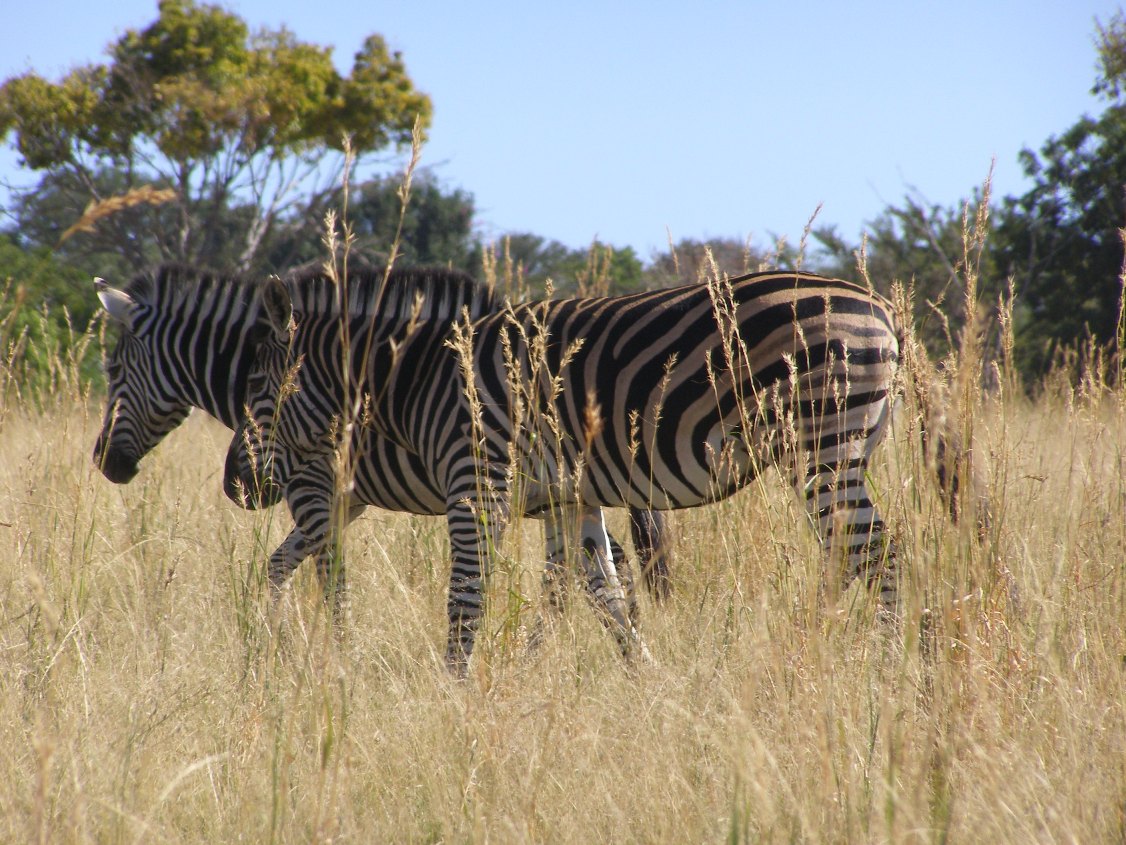
Razen velikih pet je v safarijih mogoče videti seveda še mnoge druge živali, recimo zebre, žirafe, divje svinje, pa številne različne vrste antilop, ki imajo tu vsaka svoje ime, na primer springbok, gemsbok, blesbok, eland, impala, hartebeest, wildebeest, kudu, itd. Potem so tu še številne vrste ptičev, od katerih prav nobenega ne prepoznam. In addition to the big five, there are many other animals that can be seen in safaris, for example zebras, giraffe, wild boars, and many different species of antelope, each with its own name, such as springbok, gemsbok, blesbok, eland, impala, hartebeest, wildebeest, kudu, etc. Then there are the countless species of birds that I'm not familiar with.


Ugibam, da antilope večinoma ne sodijo med ogrožene vrste živali, saj se nekatere med njimi pojavljajo na jedilnih listih v restavracijah (zebrini zrezki, springbokov carpaccio, posušeno meso kuduja, itd.). I'm guessing that antelope aren't protected species of animals because they can be found on menus in restaurants (zebra steak, springbook carpaccio, dried kudu meat, etc.).

Wednesday, February 21, 2007

Narava v Johannesburgu / Nature in Johannesburg


Johannesburg spada med mesta z največ zelenimi površinami na svetu. Kakšna škoda, da iz varnostnih razlogov večina teh zelenih površin sameva. Mesto je prepredeno z drevoredi, parki, botaničnimi vrtovi in naravnimi rezervati. Razen nekaterih zelo frekventnih lokacij, kamor hodijo domačini na družinske piknike in so posebej varovane, so na večini naravnih rezervatov obvestila, naj bodo obiskovalci pozorni na osebno varnost in naj se ne gibljejo posamično, ampak v skupinah najmanj 3 ljudi. Johannesburg is one of the cities with the largest green areas. What a shame that most of these green areas are deserted for safety reasons. The city is filled with trees, parks, botanical gardens and nature reserves. Except for a few highly frequented locations where local families go for picnics that have security guards, most of the nature reserves carry warning signs that visitors should take care of their personal safety and go in groups of at least three people.


Tu zelo pogrešam hojo po hribih, vendarle se da z malce iznajdljivosti izvesti tudi to. Kar se tiče hribov, v Johannesburgu ni praktično nobene ravnine, vse gre nekako gor in dol, tako da hoja po ravnem sploh ni mogoča. Nekateri naravni rezervati imajo objavljene termine, običajno enkrat ali dvakrat mesečno, za organizirane skupinske pohode. Na en tak organiziran pohod sem šla v Melville Koppies. Zbralo se nas je kakih 30 ljudi, nekateri so pripeljali tudi pse. Šli smo na pohod z vodnico, ki nam je spotoma povedala marsikaj zanimivega. Na primer, da se v tem rezervatu srečujejo tradicionalne afriške verske skupine, kjer imajo nočne obrede. Kaj natanko počnejo, ni znano, vendar oskrbniki rezervata občasno najdejo kokoši s prerezanimi vratovi, kar daje slutiti, da se verjetno gredo obrede žrtvovanja, ki so sicer načeloma prepovedani. Living here, I miss hiking. But with a little planning it can be done. As far as hills are concerned, Johannesburg is not flat at all, it just goes up and down so that walking on flat terrain is not possible. A few of the nature reserves have guided walks, usually once or twice a month, where individuals can attend as part of a larger group. I joined a guided walk in Melville Koppies. There were about 30 of us and some brought their dogs along. The guide led us on our walk and told us interesting facts along the way. For example, tribal local people gather in the nature reserve for their night rituals. No one knows what exactly they do, but the guards sometimes find chickens with their heads cut off which indicates that they do sacrifice rituals that are generally not allowed.


Še en izmed naravnih rezervatov je Klipriviersberg, oddaljen le 11 km od strogega centra mesta, a je tako velik, da se v njem počutiš kakor v divjini. Ta rezervat je dokaj varen za hodit, saj je povsem ograjen, na vhodu pa je varnostnik. Vendar ograja ni zaradi varovanja pohodnikov, ampak zato, da ne bi ušle živali, ki živijo v njem. Od večjih živali so to zebre in antilope. Bilo pa je tudi mnogo ptičev in številne avtohtone rastline. Zelo mi je všeč sukulentna rastlina, neke vrste aloe, ki raste vsepovsod, je zelena z belimi pikami in rdečo obrobo. Šla sem v vrtni center, da bi jo kupila za domov, a je tam ne prodajajo, seveda, saj tu raste kot plevel. Another nature reserve is Klipriviersberg, about 11 km away from the city center, but is large enough to give visitors a sense of being in the wilderness. This reserve is generally safe to walk around in because it is completely fenced and a guard sits at the entrance. The fence is not there for guarding hikers but to keep the wild animals from escaping. Among larger animals there are zebras and antelopes. I also saw many birds and local plants. I love a succulent plant, some kind of aloe, that grows all over, it's green with white spots and a red border. I looked for it in a garden center to buy it as a houseplant, but they don't have it as it's considered a weed.